
Independent baseball leagues first emerged in the early 20th century but folded after short stints, with only a handful lasting through the 1950s. Those leagues saw a resurgence in 1993 as 16 new leagues formed. Eight leagues still exist today, with four acting as partners to Major League Baseball. Those partner leagues are not directly affiliated with any MLB organizations but work with MLB to promote the sport in North America.
These leagues have served multiple purposes for players. First baseman Kevin Millar started his professional career in the independent circuit before going on to his 12-year major league career and World Series title. Pitcher Scott Kazmir was a two-time All-Star before elbow injuries seemed to derail his career. He used his 2012 season in independent baseball to earn another big-league contract and make another All-Star Game in 2014.
Despite the success stories, most are individuals who are nearing the end of their careers or exhausted by the affiliated experience. Playing in the minors can be grueling, even as the Players’ Union fought for better wages and improved benefits. These players are traded more often to a new city and are much easier to cut from rosters.
The system is an emotional rollercoaster for the majority. It’s a cutthroat business where commitment and job security can change in an instant. Independent leagues serve as a haven for players caught in the cycle. Some use their time in these leagues to showcase their abilities to ballclubs, while others use them as stepping stones to transition out of professional baseball. Regardless of intent, a stop in independent baseball can help with a mental reboot.
The Atlantic League of Professional Baseball has been one of the most successful independent leagues in terms of its connection with Major League Baseball. Established in 1998, the ALPB became the first Professional Partner League of the MLB. The league has sent nearly 1,500 players to major league organizations, with more than 40% of its players having Major League service time.
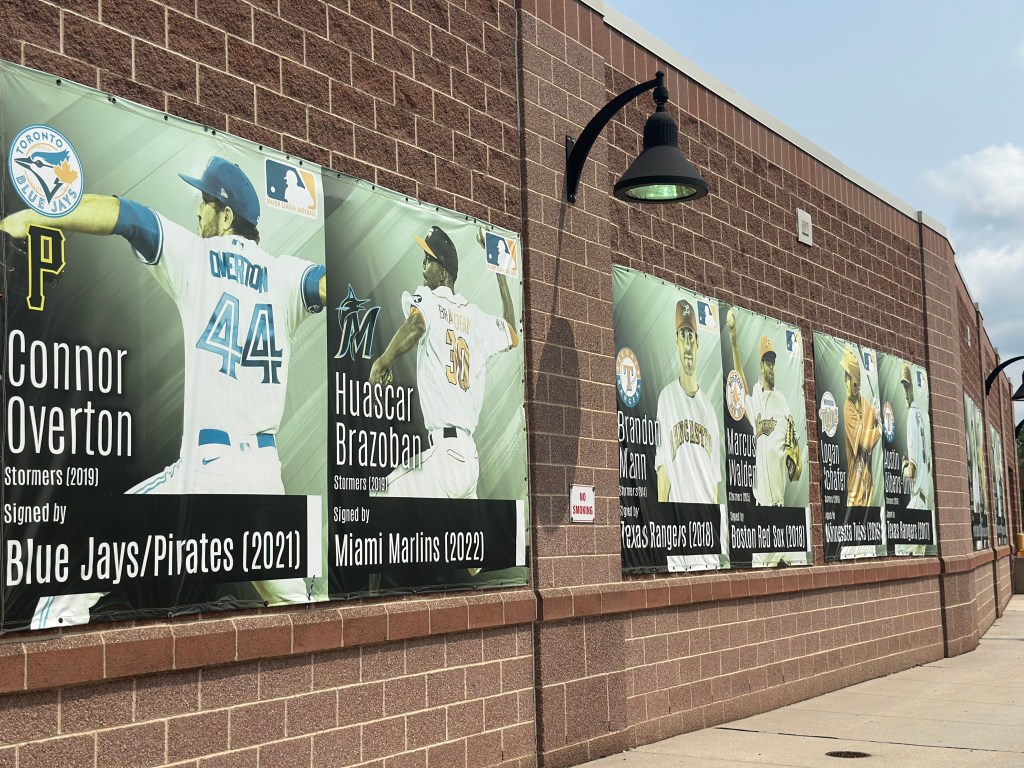
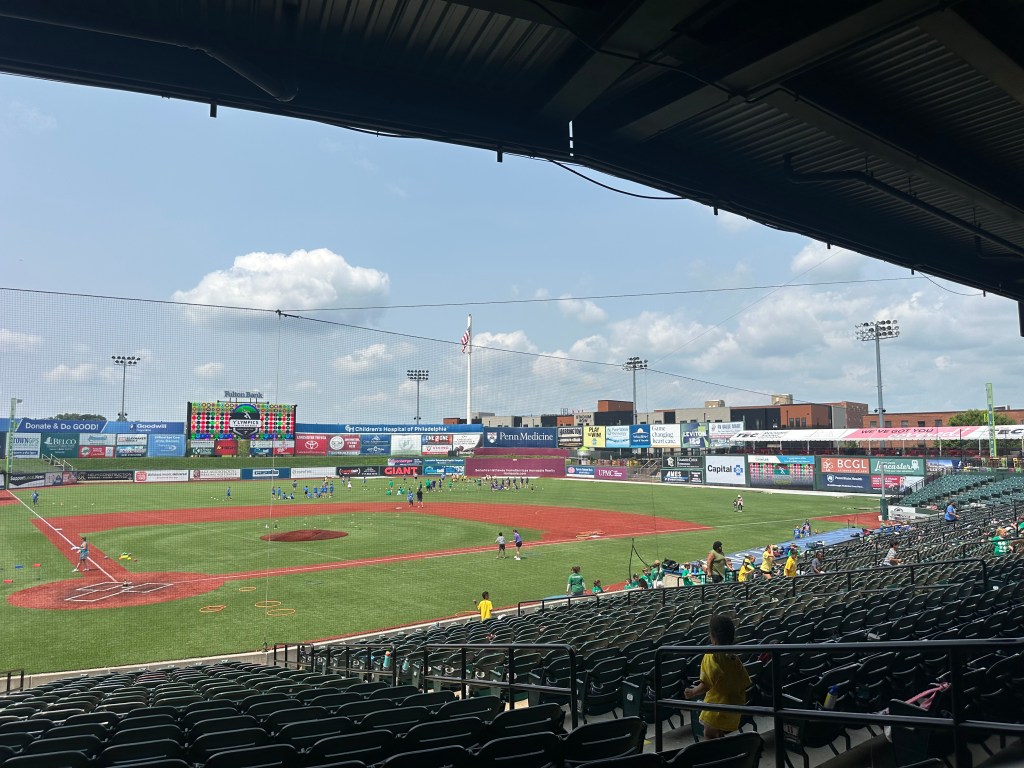
The Lancaster Stormers joined the ALPB in 2005, making them the league’s second-oldest organization. Manager Ross Peeples has been with the Stormers for the entirety of that time. Peeples spent ten years with the team as a pitcher, then immediately transitioned to the bench coach after retiring in 2014 before being named manager in 2016.
Over the two decades he has been in Lancaster, the Stormers skipper earned the nickname “The Mayor” according to a 2025 article by LancasterOnline. Peeples has fully embraced the city and the change of scenery from growing up in Southwest Georgia.
“If you would have told me back in the day that I would be living up north, I would’ve probably told you there’s no chance,” Peeples said. “I met my wife up here, we got three kids now, so the transition and everything is great.”
Those experiences have not only given him happiness in his own life but also helped him grow into the strong mentor he has become for his players. Whether it is on-field development, offering advice in their personal lives, or celebrating his guys getting the call from a major league team, Peeples is there every step of the way.
Pitcher A.J. Alexy is one of those players who “has their own story.” The right-hander was an 11th-round pick in 2016 by the Los Angeles Dodgers then traded to the Texas Rangers, where he made nine appearances over two seasons. Unfortunately, he suffered the same fate as so many others: he was designated for assignment which forced him to bounce around to a few destinations before ultimately landing close to home in Lancaster in 2024.
“I grew up an hour east from here,” Alexy said. “Having that tie to be at home but still having this outlet to express what I can do on a baseball field has been a dream come true.”
That dream has changed its meaning over a decade. In just two months, he went from turning 18 and taking pre-calc to being signed to a big-league club with his eyes set on the show. It is a stark change going from high schooler to an asset with lofty expectations, but Alexy has come to appreciate those past challenges.
That growth in maturity gave him the ability to separate the game from himself. While he recognizes that he still has a job to do to get better, he understands that the game does not define him.
“Whatever happens in between those lines, I don’t take it away the second I leave the field,” Alexy said. “I’m really big on baseball is what I do; it’s not who I am.”
Developing that relationship with the game is a testament to Peeples and shows the contrast between the independent leagues and minor league affiliates. Both Alexy and his manager noted that expectations in the minors center on skill development, and everything else takes a backseat. In independent ball, winning games is just as important as setting the individuals up for success.
Whether success is defined by getting a major league contract or an opportunity outside of baseball, it generates friendly competition in the clubhouse. Everyone has their own story, as Peeples said, but those stories all lead to the same place, and they want to see each other succeed.
“I think it’s healthy,” Alexy said. “Being an older guy in the bullpen, I might want a certain role, but I’m going to cheer that guy on no matter what.”
Every Stormer is looking to write that next chapter because the love of the game has not gone away. The shared experience of going through the minor league machine makes celebrating each other that much easier.
“I want to see everybody on this team leave,” Alexy said. “That’s the goal; you get here, you’re in the culture for a couple of weeks, and then you’re out.”
Finding yourself in the independent leagues can be a humbling experience, but not a worthless one. The maturation Alexy saw in himself isn’t specific to him. His teammates have gone through a similar progression with the help of Peeples and bonding through their faith.
“Ross and a lot of the other guys in the locker room talked more about that and becoming more of a family,” Alexy said. “It’s friendships that can carry ten, 20 years down the line.”
He went on to describe how his current situation differs from past experiences with MLB organizations. There is a stronger connection between this group in Lancaster than during his time with the White Sox, Dodgers, Rangers, and Twins farm systems because of how they operate.
“There’s an organizational ‘agenda’ where you have your important prospect guys, and if you’re not fitting the mold, you go somewhere else,” Alexy said. “Nowadays, it’s ‘what are you doing for me now?’”
The independent leagues serve a purpose beyond baseball. They are an outlet for people. For Peeples, this level provided him a new home and a family. Alexy found comfort in coming home and developed longer-lasting relationships that kept his competitive spirit alive.
Professional baseball can be cruel, but the game is still pure. The Lancaster Stormers have shown that for over 20 years by giving all who come through their doors a new opportunity.
 Ascher Marks
Leave a comment