Content

PGA Championship Returns to Aronimink; Reviews Outstanding

Members of any club that have a healthy enough ego want to be proud of their home course, especially when it is on national television. The PGA Championship returned to Aronimink Golf Club this year for the first time in decades and produced a captivating weekend that cemented the course’s reputation.

Aronimink has hosted smaller tournaments over the past 20 years but has not hosted a major since 1962. According to Aronimink Head Pro Jeff Kiddie, preparations for an event of this significance started much earlier and looked different.

“We closed the course on Nov. 3 and didn’t play golf until the Tuesday after,” Kiddie said. “The (2018) BMW: we played golf until the Friday before.”

The members’ sacrifice in not playing their course was not the only difference with this tournament. Course staff and the PGA also put much more effort into creating a stronger sense of the tournament with a more elaborate buildout of viewing areas.

“The PGA of America works really hard to make this feel like a major,” Kiddie said. “From the entry, really grand, then into the merchandising tent and into the viewing areas, they just did a really great job of when you get on property, it feels big.”

The efforts put in not only provided positive feedback among Aronimink staff, but also among attendees. Members and media shared glowing reviews of the course.

“If I graded it, it would be absolutely an A plus plus,” said 12-year member Peter Madden. “The setup was amazing, the pin placements were devilish, and everyone really rose to the occasion.”

Gabby Herzig of The Athletic has covered the PGA for the last five years and shared her experience at the event. Herzig compared this event to other major tournaments.

“I thought it was an excellent championship,” Herzig said. “The golf course provided a really fun and challenging test and having Philadelphia being the backdrop made for a really exciting week.”

The level of difficulty over the weekend only added to the final product. Rough weather in the first two rounds and creative pin locations throughout the weekend generated some frustration among golfers. After day two of the tournament, World Number One Scottie Scheffler called the pin locations the “toughest I’ve ever seen,” and Chris Gøtterup added “you’re not going to get any four-and-a-half hour rounds” due to the pin locations. This frustration from the professionals was a signal to spectators that the course had done its job.

“I think when you hear players like Scotty and Chris ‘complain’ about pins or criticize the setup, that’s when you know that it’s a good setup,” Herzig said.

Herzig went on to describe the event as taking on a more U.S. Open feel, with players being more conservative in their approach rather, than a typical PGA Championship, which rewards aggressive play. Club Pro Jeff Kiddie echoed this sentiment.

“It felt similar to a U.S. Open in that it had the players talking about hole locations,” Kiddie said. “It’s what our greens are, our greens have a lot of movement, and they never really stop moving.”

Member Peter Madden was direct in his response to the players’ comments, specifically Rory McIlroy’s comment about his plan to play long off the tee and figure it out from there.

“It seemed to be a little too much ego,” Madden said. “That seems to be pretty flippant because that’s just not the course and, in the end, the course definitely proved itself.”

Regarding the pin locations, Madden called them “devilish,” and the Sunday placements in particular also blew away Herzig.

“It was nasty,” said Herzig. “I was actually thinking to myself, ‘how did they think to put a pin there?’”

These pin locations were calculated decisions, however. The fact that they frustrated the pros and left the amateurs in awe was only a bonus. Club Pro Jeff Kiddie disclosed the thought process of Chief Championship Officer Kerry Haigh.

“Largely, the week was scripted,” Kiddie said. “When he (Haigh) chooses the hole locations for the practice round, those areas aren’t going to be used for the championship.”

Kiddie explained that, from his perspective, the first two rounds had the hardest pin locations, Saturday with the easiest and Sunday in the middle. By Kiddie’s understanding, the intent was to create a difficult first two rounds, allow movement on the leaderboard on Saturday, and finish with a thrilling Sunday.

This plan produced a compelling weekend for golf fans across the board. The play over the weekend allowed Aronimink and the PGA Championship to re-establish themselves as fierce tests of mental and physical resilience.

“I think the PGA Championship came back into the conversation of being the type to push players to their limits,” Herzig said. “I think it was nice to see [it] re-entering that conversation.”

The 2026 major schedule continues June 18-21 at Shinnecock Hills, another course famous for its difficult conditions.

College Football on the Senate Floor; Sport at a Breaking Point

The Senate presenting legislation to regulate college football is a sign that the sport has become too chaotic. With ballooning Name, Image, and Likeness (NIL) costs, rampant transfers, and the widening gap between the Big Ten and SEC versus the rest of the country, college football has developed a laundry list of issues that all seem pressing.

The issue at the top of most peoples’ minds is NIL. As the financial gap widens between the marquee schools and smaller conferences, most people agree that there should be a level of regulation.

“How do we compensate athletes in a way that’s not going to impact the other sports,” Bill Bender of The Sporting News asked. “You’ve got payrolls that are $42 million and they’re not going down.”

Former Alabama head coach Nick Saban referred to the growth in those numbers when he spoke on the Senate floor last week. He said he had $2.7 million in his first year with NIL and that number has grown to $24 million for current head coach Kalen DeBoer.

Trey Wallace of OutKick Sports noted that smaller schools cannot keep up in this landscape that hinders the ability to be consistently competitive by retaining talent.

“Lower tier schools and conferences are trying to stay afloat,” Wallace said. “You’re spending four million dollars a year and maybe you’re only bringing in a million.”

There was an initial attempt to avoid this explosion in spending. Ross Dellenger of Yahoo! Sports described the evolution of NIL. He referred to that attempt to regulate spending, but, as schools found loopholes in, the NCAA has been behind in creating order.

“We’re in the middle of another change where this enforcement entity they created to have rules around athlete compensation is now kind of crippled because the schools are getting around the rules,” Dellenger said. “It’s just a constant state of evolution.”

These never-ending changes with no substantial solutions have created another looming threat: the possibility that the Big Ten and SEC could separate from the NCAA. The legitimacy of that claim is still a debate, but there is enough practicality to make it a talking point.

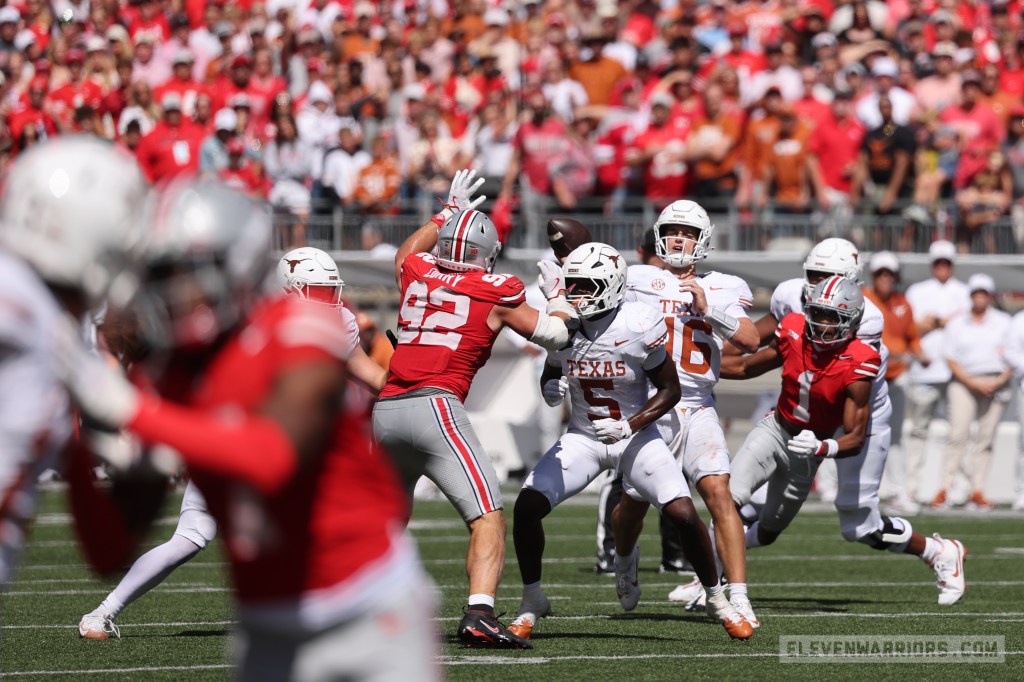
Sen. Ted Cruz said, “they want to form a super league,” when discussing the Protect College Sports Act. Big Ten commissioner referred to those claims as “fabrication.” Still, the revenue and talent pool being centralized in those two conferences makes a super league seem possible. The 2026 NFL Draft saw 17 of the 32 first round selections come from those two conferences and seven of the top ten highest NIL valued rosters going into 2026 from there as well.

“The reason the super league talk has started is you have 30 or 40 schools that are able to pay this much money,” Bender said. “You have this middle tier of schools that can’t compete with that.”

While a separation from the NCAA seems logical from a competitive standpoint, Trey Wallace mentioned the complications with media rights. Right now, ESPN has a contract with the SEC and FOX with the Big Ten.

“I think it would be foolish to break off right now,” Wallace said. “Sure, the SEC and Big Ten could bring in three billion dollars on a TV contract, but do we think FOX and ESPN are going to work together?”

Wallace would go on to explain that while he does not believe we are at the point of separation being a real threat, it would be disingenuous to pretend like those conversations have not happened. Kyle Wood of Athlon Sports echoed that sentiment when he said, “if it does happen, it’s still many years away.”

Ross Dellenger gave more insight to the thought process behind separation as well. He noted that the NCAA has never had any part in regulating postseason football. Prior to the College Football Playoff (CFP), the BCS was the sole governing body of postseason football.

“There’s a thought that they’re not in the football postseason or championship business, so they shouldn’t be in the business at all,” Dellenger said. “I think we’re slowly seeing that sort of happen.”

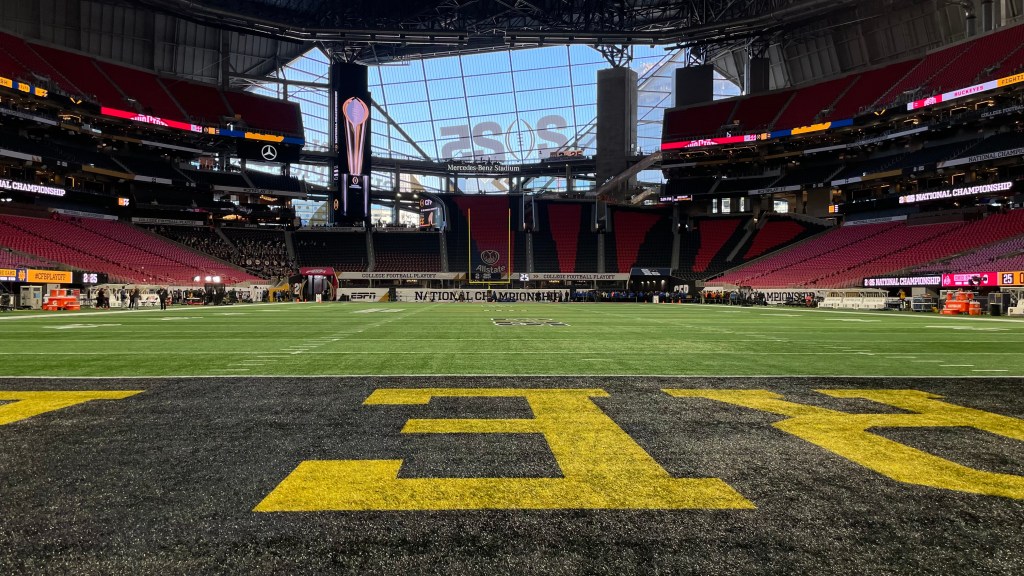
The CFP has been a talking-point this offseason alongside separation and is closely related to the same arguments. Right now, there is discussion on expanding the playoffs yet again. There have been rumors about the format expanding from 12 to 16, and as many as 24 teams.

Trey Wallace discussed that expansion from the network perspective and noted that the current bylaws require ESPN to open the games up for bidding once the bracket eclipses 14 teams: a reference to his argument that the networks reservations in working together. The idea behind expansion, however, is to create more compelling matchups that would generate more revenue for the league.

“If we went to a 16-team format, or even 24, I think you would have more of these matchups,” Bill Bender said. “The NFL is not going to back down from scheduling big games, so I want to see those games [early in the year].”

With college football at its breaking point, there is still hope that solutions can be found. While an unprecedented amount of chaos, this new landscape is only five-years-old.

“I’m not sure that bill will pass because it’s almost like an itemized list,” Bender said. “I think the NCAA and conference commissioners will continue to work together, but it doesn’t hurt to have a push from Congress.”